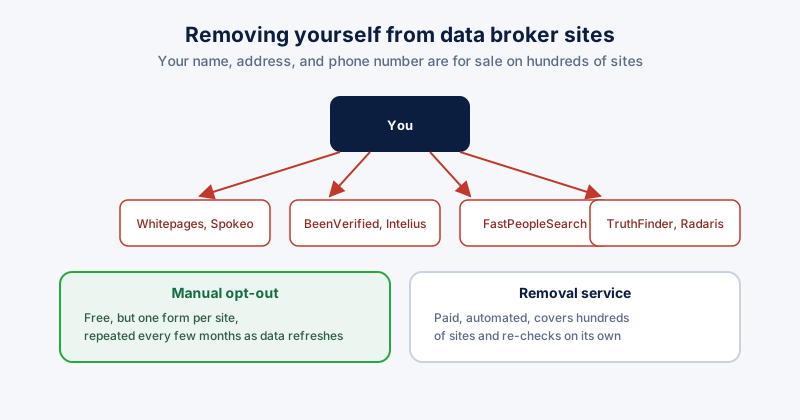
Search your own name online and there's a good chance a people-search site already has your current address, phone number, age, and relatives listed — assembled from public records and sold to anyone who searches. This is the data broker industry, and getting yourself off it is one of the highest-impact privacy moves most people never make.
Where your data actually spreads
A handful of sites account for most of the exposure: Whitepages, Spokeo, BeenVerified, Intelius, PeopleFinders, FastPeopleSearch, Nuwber, TruthFinder, PeopleLooker, and Radaris are the ones that consistently surface the most searchable personal detail. Each pulls from public records independently, so removing yourself from one doesn't remove you from the rest.
Manual opt-out: free, but repetitive
Every major data broker has an opt-out page, usually buried in its footer or privacy policy. The process is the same shape everywhere: find your listing, submit a removal request, sometimes verify by email. It's free, and the catch is that these sites refresh their data from public records regularly — expect to redo this every few months as your listing quietly reappears.
2026 update: California's DROP platform
If you're in California, the state's new Delete Request and Opt-Out Platform (DROP) lets you send a single removal request to over 600 registered data brokers at once instead of visiting each site individually. As of August 2026, brokers covered by DROP are required to honor a deletion request within 90 days — a meaningful improvement over the old one-by-one process.
Removal services: paid, but automated
Services like Incogni, Aura, and DeleteMe handle the same opt-out requests on your behalf across hundreds of sites, and — this is the part manual removal can't match — they re-check periodically and file new requests when your data reappears, without you having to remember to look.
Timing matters
Early in the year tends to be the most effective time to do a full pass, since a lot of these sites do bulk refreshes from updated public records around then. That said, the actual best time to start is now — every month exposed is a month your information sat there for anyone who searched it.
This is exactly the kind of cleanup that pairs naturally with a broader digital footprint cleanup — the less of your personal data sits around waiting to be found, the smaller a target you are for the scams and phishing attempts built specifically on top of it.